Italian Verbs: I verbi del venerdi’ 8.6.10

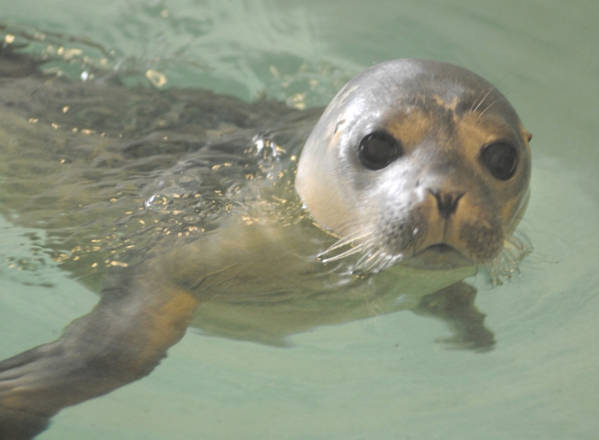
seal cub in water, cucciola foca in acqua


Buon giorno!

.

It’s Friday, and it’s time for some more Italian verbs in this recently born post series that I’ve named I verbi del venerdi’ (The Verbs of Friday).

.

Ecco una mini-lezione basata su otto verbi. (Here’s a mini lesson based on eight verbs.)

.

Svolgere, Partorire, Proseguire, Controllare, Radoppiare, Allattare, Crescere, Sviluppare

.

Listen here for pronunciation:

.

Pay close attention to the verbs with double consonants — to correctly pronounce them, pause a little longer on the double consonant.

.

Now, here’s what they mean. Notice how for some, there is a similar word in English. For others there’s a more common verb or word in Italian that you may already know — good tricks for remembering the meanings.

  1. Svolgere/Svolgersi: to take place, happen. Example: L’evento si e’ svolto ieri. (The event took place yesterday.)
  2. Partorire: To give birth. Noun form: il parto (the birth, birth process)
  3. Proseguire: to carry on, keep on; similar to ā€˜seguire’ (to continue).
  4. Controllare: to check, monitor, inspect, control. Noun form: il controllo (a check, checkup, inspection, or control)
  5. Radoppiare: to double. Root word: ā€˜doppio’, or ā€˜double’.
  6. Allattare: to nurse, breastfeed. Noun form: l’allattamento (nursing, breastfeeding). Notice the word root ā€˜latte’, or ā€˜milk’.
  7. Crescere: to grow. Noun form: la crescita (growth).
  8. Sviluppare: to develop. Noun form: lo sviluppo (development).

.

You might have noticed a common thread of childbirth and development among these Italian verbs. They are from a current Italian news story, ā€œNata cucciola di foca all’acquario di Genovaā€ (Seal cub Born at the Genova Aquariumā€).

.

Was this blog post helpful to you? I’d love to hear your feedback! Please leave comments in the form below.

.

A complete audio lesson (including the story, a translation, and a vocabulary study) is available on this site for subscribers of Jodina’s Italian Audio Club. Monthly subscriptions are available for unlimited online access to a large and growing collection of custom audio lessons not available anywhere else. More info here.

.

Here’s a link to the original story in Italian. See if you can find all of the verbi del venerdi’. Seal cub story.

Posted in Uncategorized | 2 Comments

Italian Proverb: Il Detto della Domenica: “Buon sangue non mente.”

Proverbs, sayings, and idiomatic expressions are a rich way to learn new words and gain insight into the colloquial side of a language. Italian, like other languages, has a wealth of these enlightening expressions — some wise and others witty.

.

Because they are usually brief, they can be almost like a mini lesson in themselves.
I challenge you to memorize this week’s phrase. Take me up on this, and treat yourself to a sense of accomplishment!


Ecco il detto di questa domenica:Ā  {Here’s the saying for this Sunday.}

.

ā€œBuon sangue non mente.ā€

.

Listen to pronunciation:

.

Spiegazione (Explanation):

Lo si usa principalmente per casi negativi ma indica il carattere e il costume della discendenza da padre a figlio. Detto anche ā€˜tale il padre tale il figlio’.

.

Translation: It (this proverb) is used principally for negative cases to indicate the character and habits of a father (mother, parents) as they carry forward to the son (daughter, children).Ā  Also expressed as ā€˜like father like son.’

.

Literally ā€˜Buon sangue non mente’ means ā€˜Good blood doesn’t lie’.

This saying is similar also to the English saying, ā€˜The apple doesn’t fall far from the tree’.

.

Do you have any favorite Italian proverbs you’d like to share?

I’d love to hear them — leave a comment below!

Posted in Uncategorized | 4 Comments

Italian Verbs: I Verbi del Venerdi’ 7.16.10


Buon giorno!

.

It’s Friday, and it’s time for a new blog post… and I thought why not some ā€˜verbi’ per venerdi’? (some ā€˜verbs’ for ā€˜Friday’)Ā  And a new Italian blog post was born — I verbi del venerdi’!

.

Ecco una mini-lezione basata su cinque verbi. (Here’s a mini lesson based on five verbs.)

.

Consigliare, Sfogliare, Osservare, Riferire, Raccontare

.

Listen here for pronunciation:

.

Here’s what they mean. Notice how for some, there is a similar word in English — a good trick for remembering the meaning.

  1. Consigliare: to suggest, advise, or counsel
  2. Sfogliare: to browse or to page or leaf through (the Italian word for page is pagina or foglia)
  3. Osservare: to observe
  4. Riferire: to report (as in to report on for a news story), or to refer
  5. Raccontare: to tell (a story), or to recount

These Italian verbs are from a current Italian news story, ā€œBimbo Prodigioā€ (Child Prodigy).Ā  A complete audio lesson (including the story, a translation, and a vocabulary study) is available on this site for subscribers of Jodina’s Italian Audio Club. A subscription is just $6.95/month for unlimited online access to a large and growing collection of custom audio lessons not available anywhere else. Click here for more info.

.

The original story can be read on the ANSA website.

Posted in Uncategorized | Tagged , , , , , | 1 Comment

Italian Recipe: The Best Polenta EVER!


Salve!

Recentemente ho avuto l’occasione di assaggiare quella che considero tra i migliori piatti di polenta che abbia mai mangiato. Translation: I recently had the chance to taste what I consider to be among the best polenta dishes I have ever eaten.

.

It was simple yet succulent. In fact, I can still recall its smooth taste and the delicate flavors of the herbs used in making it. It really was melt-in-your-mouth good (the kind of stuff that, if you’re gonna make it, you’dPolenta Italian Recipe better invite a lot of people, or later you’ll finish the rest off standing at the kitchen counter alone!)

.

Per fortuna (Luckily), not only do I know the person who made this lovely polenta, la cuoca (the cook) Poppy (aka Papavera) is a student of mine and has generously agreed to share her recipe! Che allegria! (What happiness!)

.

But first, before I bestow the recipe upon you, a little history on polenta. Polenta is truly an Italian national dish and may have a history much more ancient than either pizza or pasta.

.

Especially popular and abundant in the North, and dubbed by some as ā€˜Italian grits’, polenta shares similarities to the hominy grits so popular in the Southern United States. Both are ā€˜mush’ type foods that originated as a staple to impoverished populations.Ā  However, what would later be called polenta in Italy, was in ancient times one of the earliest and simplest foods made from various types of grains other than corn. First made from wild grains and later from primitive wheat, faro (a popular Italian grain), millet, spelt or chickpeas, the grain was mixed with water to form a paste and then cooked on a hot stone.

.

Polenta was still very popular in Roman times (known as pulmentum) and eaten either in a porridge or in a hard cake-like form, much like today. And still later it was made from buckwheat introduced into Italy by the Saracens.

.

The nutritive grain buckwheat, or ā€˜grano saraceno’, is still popular in Tuscany for making polenta because of its distinctive flavor, and it was widely favored for centuries. However, sometime in the 15th or 16th centuries a new crop know as maize arrived from the New World, and Buckwheat polenta began losing its popularity to this grain. It wasĀ  a perfect crop for the farms of Northern Italy, and landowners were able to grow vast fields of corn for profit, while the the peasantry subsisted on cornmeal.

.

While this new version of polenta was abundant, it was much less nutritious than earlier forms of the dish. But because cornmeal polenta is so tasty and filling, it remained a staple long after conditions improved for the poor. And amazingly, a simple act of greed on the part of landowners was a key ingredient in shaping an important component of Italian cooking. Since then, most of Italy’s polenta consumption has been from corn, rangingĀ  in color from golden yellow to the white polenta of Veneto.

.

E addesso, la ricetta. (And now, the recipe.) I am presenting it in English. {Basic food words in Italian and equivalent metric measurements are in brackets.}

Herbal Polenta with Parmigiano Reggiano

  • > 1 32-ounce container fat-free, low-sodium chicken broth {907 ml brodo di pollo}
  • > 1 tablespoon chopped fresh rosemary {2,5 gr rosmarino fresco tritato}
  • > 1 tablespoon butter {15 gr burro}
  • > 1/2 teaspoon freshly ground black pepper {1,5 gr pepe nero macinato}
  • > 1/4 teaspoon salt {1 gr sale}
  • > 1 cup yellow corn meal {360 gr polenta}
  • > 1/2 cup grated fresh parmigiano reggiano cheese {90 gr formaggio parmigiano reggiano}
  • > 1/4 cup chopped fresh flat leaf parsley {10 gr prezzemolo fresco tritato}
Bring first 5 ingredients to a boil in a large saucepan over medium heat.
{In una pentola grande fare bollire su fiamma media i primi cinque ingredienti.}
Gradually add cornmeal, stirring constantly with a whisk.Ā  {Aggiungere gradualmente la polenta, girando continuamente con un frullino.} Cook 3 minutes or until thick and bubbly, stirring constantly. {Cuocere per tre minuti o finche’ diventi spesso e fa bolle.} Remove from heat; stir in cheese and parsley.Ā  {Togliere dalla fiamma; quindi aggiungere il formaggio e il prezzemolo mescolando bene.}
Pour the hot polenta into a glass (pyrex type) baking pan and eat warm. {Versare la polentaĀ  in una pirofila di vetro e servire calda.}
Yield: 6 (2/3 cup) {Dosi per 6 persone}
.

Posted in Uncategorized | Tagged , , , , , , | 5 Comments

………………. Favorite Italian Words

{Foreword: I’ve been a bit ā€˜AWOL’ and remiss about blogging since the end of my Spring Italian classes — needed a bit of time away. But I am back — Eccomi! or ā€˜Here I am!’}


Ciao!

.

As a self-professed grammar geek and word fiend, being asked to do a blog post on my five favorite Italian words (cinque parole italiane preferite) left me with ā€˜l’imbarazzo della scelta’… (literally meaning the ’embarassment of the choice’) as in Italian there are, as many know, an overwhelming number of amazing words to choose from.

.

Italian Words

.

I decided to go with some of the first favorites that popped into mind.

.

Ecco le mie cinque parole italiane preferite (Here are my five favorite Italian words):

  1. 1. Cicciotto(a) /chee-choh-toh/– coming from the word ā€˜ciccio’, and meaning ā€˜chubby’ (but not fat). I like this word for a couple of reasons… it’s fun to say — I like the way it feels in my mouth, and by adding the ā€˜-otto’ suffix, it changes to a word used as a term of endearment or a nickname… reminding me of an old friend back in Italy that we used to call Ciccio or Ciccioto. It also reminds me of a student I once had (a Brazilian woman studying English) who would address me as ā€˜Teacher’. Owing to her lovely Portuguese accent, it came out sounding like ā€˜ciccia’ — as if every time she asked me a question she were calling me ā€˜Chubby’. It was hard to keep a straight face, and finally I had to insist she use my first name!
  2. Ridimensionare, meaning to re-dimension or re-frame. This word is often used when one is in a state of upset over some situation. A friend might suggest, ā€œCerchi di ridimensionareā€ (Try to re-dimension) — an invitation to step back from whatever drama is at hand and re-frame or view it from a perspective that makes it easier to handle… in essence to ā€˜shrink’ the difficult situation in your mind’s eyeĀ  and make it easier to deal with. I love the concept.
  3. Scommettiamo?, meaning ā€˜Shall we bet?, or Wanna bet? (from the verb ā€˜scommettere’, to bet). Used more often to line up in cahoots with someone over a forgone conclusion than to actually bet money, also to challenge someone’s idea. Example: Scomettiamo che anche questa volta Luigi ā€˜dimentica’ il suo portafoglio? (Wanna bet that once again Luigi ā€˜forgets’ his wallet?). Other phrases: ā€˜Ci puoi scommettere/ Puoi scommettere’ (You can bet/count on it.), ā€˜Ci puoi scommettere la testa!’ (You (can) bet your life!)
  4. Pisolino, meaning ā€˜nap’. Phrase: ā€˜fare un pisolino’ (to have or take a nap). I think this is just the cutest word! It’s the only way to say nap in Italian (riposare = to rest, but it’s not quite the same). One funny thing about it is that the suffix ā€˜-ino’ usually changes a word to the diminutive. But in this case, ā€˜piso’ on it’s own is not a word. ā€˜Pisolino’ sounds like baby talk to my ears, and reminds me of ā€˜pisello’ or ā€˜pea’ — also a little thing. What’s cute, is that whether a person is 4 or 54, to take a nap they still have to say they’re going to ā€˜fare un pisolino’. To my ears it’s very sweet!
  5. Scherzare, meaning to joke. (In musical terminology it means ā€˜a movement or passage of light or playful character’.) I think I love this word because (a) it’s fun to say, phonetically ==> /scaret-SAH-ray/, and (b) for its crazy-looking spelling. It’s also one of my favorite things to do — joke around. A few phrases: ā€˜Non scherzare!’ (Don’t joke!), ā€˜Scherzi?’ (Are you joking/kidding?), and ā€˜Sto scherzando!’ (I’m joking!). Also, ā€˜scherzi a parte’ (joking aside, seriously), ā€˜uno scherzo di natura’ (a freak of nature), and ā€˜fare uno scherzo a qualcuno’ (to play a joke on someone).

.

What are your favorite Italian words? I’d love to know! You can share your favorite Italian words by leavingĀ  a comment below in the ā€œLeave A Replyā€ space.

.

I was invited to write on this theme by fellow Italian blogger and friend Melissa Muldoon of Diario di una Studentessa Matta (blog post: ā€˜five favorite Italian wordsā€˜) as part of a meme to help share and promote Italian language learning, inspired by a post originating on the Italofile blog.

.

Posted in Uncategorized | 6 Comments

Jovanotti’s “Per te”~ Italian Song of the Week

ā€œPer teā€ is a lullaby (ā€˜ninna-nanna’ in Italian) written by Lorenzo ā€˜Jovanotti’ Cherubini for his daughter Teresa. Per te is a sweet, feel-good tune whose poetical lyrics are a dedication to a loved one of all in life that is pleasant, beautiful, and happy.

One of my favorite Italian singer-songwriters, I love Jovanotti mostly for his philosophical, poetical, and ā€˜pensante’ (thoughtful) lyrics, which often delve into deeper aspects of everyday life, and feature a deft use of the Italian language.

For some excellent exercise for your ā€˜Italian ears’, try the 2005 album ā€œBuon Sangueā€.


Bio info

Jovanotti (an anglicized version of the Italian word giovanotti, meaning young people) is an Italian singer-songwriter and rapper. Jovanotti, whose real name is Lorenzo Cherubini, was born in Rome on 27 September 1966. His family is from Cortona, in the Province of Arezzo, Tuscany. On 6 September 2008 he married Francesca Valiani at Cortona, in the Church of Santa Maria Nuova. Their daughter Teresa was born in 1998. He dedicated the lullaby ā€œPer teā€ to Teresa, one of the successes of the album Capo Horn (1999).

From the mix of hip hop, rap and disco of the early successes, however, Jovanotti departed gradually, approaching to funk, world music and even classical arrangements and ska influences. As his musical influences changed, so too did his lyrics, which, over time, began to increasingly address philosophical, religious and political issues, which are more typical of the Italian cantautore (singer-songwriter) tradition. His social and political commitment increased as well. Some of his earlier work is also closer to keyboard-heavy 1980s pop.

Most of his songs are sung in the Italian language; though he also released a Spanish-language greatest hits album. His live album includes a short version of the Sugarhill Gang’s ā€œRapper’s Delightā€. Jovanotti appears on several international compilations, most notably Red Hot Rhapsody, a 1998 tribute to George Gershwin, on which he performed ā€œI Got Rhythmā€. One of his most famous songs was ā€œL’Ombelico del Mondoā€. Jovanotti also appeared in a Luciano Pavarotti charity concert in 1996.

His 2005 CD, Buon Sangue, is influenced by both rock and old school hip hop. It is one of his most innovative works to date. Edoardo Bennato collaborated on one track, while bass player Saturnino co-wrote two of the songs.

In 2007, he was featured at the end of Negramaro’s song, ā€œCade la Pioggiaā€, of their CD, La Finestra, and in 2008 he released the album Safari.

In 2008, he performed as guest artist on the track ā€œLugar Comumā€ on Encanto (Sergio Mendes’ album).

The title ā€œPioveā€ was released for the third season of The Sopranos as an ending credits track.

Commitment

Along with the evolution of his sound, his social and political commitment has increased since the 1990s. As a convinced pacifist, he has frequently worked with organizations such as Make Poverty History and Amnesty International, and he has contributed to events dedicated to debt relief (Global Call to Action Against Poverty).Ā  Jovanotti is a vegetarian.

Posted in Uncategorized | 3 Comments

Italian Song of the Week:

ā€œIl caffe della Peppina”


A great way to learn Italian, or any language, is listening to and singing along with children’s songs. It’s an excellent way to attune your ear to the pronunciation, rhythm, and cadence of the Italian language.

.

Their simple melodies make these songs easy to master — in no time you’ll find yourself humming and singing them!

.

This week in my Italian classes, we’re learning the Italian children’s songĀ  ā€œIl caffe della Peppinaā€.Ā  The song is from the ā€œLo zecchino d’oroā€ (The Golden Coin), an International Festival of Children’s Song that has been held every year since 1959, first as a national (Italian) event, and after 1976 as an international one.

.

This first video is the song cartoon (ā€˜cartone animato’) and has Italian subtitles.

.

The second video features ā€œIl caffe della Peppinaā€ sung by an Italian children’s chorus from 1971. Very, very cute — carinissimo!

This last video features the lyrics karaoke-style, so you can easily sing along!

.

Posted in Uncategorized | Leave a comment

Learn Italian — Part I: “50 Ways to Accelerate Your Learning Curve”

Buongiorno!

Article/Blog by Jodina Hahn

This is Part I of a 5-part series on ideas and ways to amp up your speed of learning. (Aumentare la tua velocitĆ  di apprendimento)

.

People often ask me for advice on learning a foreign language.Ā  And it’s often after they’ve been trying to learn it completely on their own, using books, CDs, etc. And very often they’re at a point where they’ve hit a wall… that is, they’re not making the progress they’d hoped for, or it’s become stale.

.

I’ve not only spent many years teaching languages to adults, I’ve also spent many years as a (successsful) language learner… so I know a thing or two… šŸ™‚

For starters, I say make it as real as possible, immerse yourself in your language of choice as much as you can. There are many ways you can do this… even though you don’t live in Italy!

.

Most importantly, consider that language is a tool of communication… and get yourself into a situation where you are practicing speaking it as soon as possible. Enroll in a class, join a study group, or get a tutor. It’s hard and unnatural to learn a language in a void alone with just you and your books, etc. It would be like reading and studying about working out, getting in shape, and eating healthy, but never actually going to a gym, going for a run, or joining a team.

And you need to do it regularly… getting a workout once a month is not going to make you buffed or fluent!

.

And like getting in shape, you do need to make a commitment and keep at it, which is why it’s so important to find a sport/gym or language/learning methods you really like. Fall in love with your language of choice, because in order to become fluent, you’ll need to spend a lot of time together! šŸ˜‰

.

The approach I suggest is multi-pronged:

.

Enroll in a class, join a group that meets regularly, or get a regular tutor — thisĀ  gets you speakingĀ  and processing the language (even if you’re just a beginner — you gotta start somewhere!), keeps you accountable, and motivates you to studyĀ  between ā€˜live’ sessions, so that each time you have a little more to bring to the table and can get more out of the encounter.

.

Once you’re in a situation using the language for what it was actually intended –speaking– other aspects of study take on a different perspective, and all those study tools (I think of them as language toys) start to look all shiny and fun again. Now it’s just a question of trying on/out the many different ways to get more of the language into your regular life between ā€˜live’ practice sessions. There are many different styles… experiment with all the different ways to learn (many of them non-traditional) and find out which ones work for you.

.

Here, the first TEN of ā€œ50 Ways to Accelerate Your Learning Curveā€:

  1. Rent and watch Italian movies. (Click here for a few I like.)
  2. Hang out in little Italy.
  3. Find Italians to befriend on Facebook.
  4. Check out/Participate in Facebook pages dedicated to learning Italian (Two to start: (1) ItalianoWithJodina Facebook page and (2) Italian Talk–Another I visit regularly.)
  5. While driving in your car, or anywhere you’re completely alone, talk to yourself–pretend to be Italian, unable to speak English.
  6. Increase vocabulary by learning new words for everyday household items. Paste Italian words around the house, on sticky notes.
  7. Read books set in and about Italy–for example… Ā Ā Ā Ā Ā Ā Ā Ā Ā Ā Ā Ā Ā Ā Ā Ā Ā Ā Ā Ā Ā Ā Ā Ā Ā Ā Ā Ā Ā Ā Ā Ā Ā Ā Ā Ā Ā Ā Ā Ā Ā Ā  La Bella Lingua by Dianne Hales, Under the Tuscan Sun by Frances Mayes, Living in a Foreign Language by Michael Tucker, Too Much Tuscan Sun by Dario Castagno, La Bella Figura, Beppe Severgnini
  8. Cook Italian food — find recipes on theĀ  internet.
  9. Check out other blogs/websites dedicated to things Italian, including: www.BecomingItalian.com, Diario di una studentessa matta, Bleeding Espresso
  10. Listen to and sing along with Italian music CDs. (YouTube is a great source, as is my Links Page.)

Posted in Uncategorized | 3 Comments

Italian Language Films

~ San Diego Area ~ Now Showing ~


Buon giorno!

.

Watching Italian films in lingua originale (original language, in this case Italian) is an excellent way to sharpen your ear to the sounds of the language spoken within a specific context. Not to mention, seeing Italian cinema is always an excellent way to get a dose of Italian culture!

.

Here are links to info on current and upcoming Italian movies in and around San Diego.

Buona visione!

  • Film ā€œIl pranzo di ferr’agostoā€ (Mid-august Lunch, with English subtitles), La Jolla Village Landmark Cinema, is still showing. Highly & amusing. Get out & see it!
Landmark Cinema
8879 Villa La Jolla Drive
La Jolla, CA 92037
(619) 819-0236 

Showtimes: Daily 4:30 and 10:30 pm, Sat/Sun also at 11 am.

  • Mira Costa College International Film Series, monthly through May 2010 ~ Details here. (Location: Oceanside, Cost: free)
  • San Diego Italian Film Festival Classic Film Series, monthly/bi-montlhy through June 2010 ~ Click here for details
  • A few Italian film titles that I like (rent thru Netflix or your favorite movie rental provider): Jodina’s Movie Picks


Posted in Uncategorized | Leave a comment

One Wild Woman! ~ MINA ~

italian singer Mina.

Mina – Bio info

(Links to music & video below)

Anna Maria Mazzini, born 25 March 1940, known simply as Mina, is an Italian pop singer with Swiss citizenship. Born to a working class family in Busto Arsizio, Mina grew up in Cremona and was college educated in accounting. She went on to become one of Italy’s great modern female vocalists. Distinguished by the great extension and agility of her soprano voice and her image as an emancipated lady, she was a staple of the Italian television variety shows and a dominant figure on the Italian charts in the 1960s and 1970s. Mina combined several modern styles with the traditional Italian melody and swing music, making her the most versatile pop singer in Italian music. She dominated the Italian charts for fifteen years and reached an unsurpassed level of popularity in Italy.

italian singer Mina.

Mina’s first TV appearances in 1959 presented the first female rock and roll singer in Italy. Her loud syncopated singing earned her the nickname Queen of Screamers (La Regina degli urlatori). For her wild gestures and body shakes, the publicity also labeled her the Tiger of Cremona (La Tigre di Cremona).

.

Mina’s pregnancy and relationship with a married actor (Corrado Pani) caused her to be banned on the public Italian channels in 1963, because her lifestyle did not agree with the dominant catholic and bourgeois morals. After the ban, the Italian broadcasting service RAI continued, unsuccessfully, trying to prohibit her songs, which were forthright in dealing with subjects such as religion, smoking, and sex. To her ’bad girl’ image, Mina added sex appeal and a cool act, featuring public smoking, dyed blond hair, and shaved eyebrows.

italian singer Mina.

Mina’s voice had distinctive timbre and great power. Her main themes were anguished love stories interpreted in a dramatic way. The singer combined classic Italian pop with features of blues, R&B and soul music in the late 1960s. Top Italian songwriters created material with large vocal range and unusual chord progression to showcase her singing skills.

.

Around 1978, the singer went into a sort of self-imposed exile in Switzerland. On March 30, 2001, after 23 years of reclusion, Mina’s made her last public appearance, on video showing her in a recording studio. Mina remains somewhat of an enigma, and in these years of ā€˜voluntary exile’, she has declined to give interviews and has communicated with her fans only by way of her records and her columns in magazines such as Vanity Fair and contributions to Italian newspapers.

.

Here, a few Mina tunes I like (links to music & video):

    • Tintarella di Luna, a light upbeat tune considered ā€˜surf pop’, was Mina’s first Italian #1 hit (1959). The name, ā€œTintarella di luna,ā€ means ā€œMoon Tanā€, which was performed in her first musicarello (musical comedy film) ā€œJuke box – Urli d’amore.ā€

    • Io Sono il Vento, (I am the Wind), a song of a more dramatic flavor. Good collection of pictures here.

  • Le Mille Bolle Blu, (The Thousand Blue Bubbles), clip from the film ā€œMina… Fuori la Guardiaā€Ā Ā Ā Ā  — check out the hair, the set, etc… Ā Lady Gaga’s got nothing on Mina! šŸ˜‰

Ā 

Posted in Uncategorized | 3 Comments